Why experts are questioning Applebaum-Grisso
The Applebaum-Grisso model was designed for patients who temporarily deviate from a Western allopathic baseline. Full episodes every other Monday. Produced by: Human Content
Dr. Appel traces the model's origins in the 1980s as a patient-empowerment tool, examines how its statutory adoption across more than half of US states has calcified it beyond its original intent, and describes in detail the categories of patients for whom the model systematically fails. Full episodes every other…
Documented racial bias in capacity assessment stems in part from the model's privileging of patients who can articulate reasoning in medical-legal language, systematically disadvantaging those with less social capital who may know exactly what they want but cannot express it in those terms. Full episodes every other Monday. Produced by:…
In this episode of Psychiatry Bootcamp, Dr. Mark Mullen welcomes Dr. Jacob Appel, psychiatrist, attorney, bioethicist, polymath, and emergency psychiatrist, for a rigorous and clinically grounded critique of the Applebaum-Grisso "Four Abilities Model" of decisional capacity assessment. Dr. Appel traces the model's origins in the 1980s as a patient-empowerment tool,…
In this episode of Psychiatry Boot Camp recorded live at Saint Louis University, Dr. Mark Mullen is joined by Dr. Kristin Mueller, an emergency medicine physician and physician-researcher at Washington University in St. Louis, for a discussion on firearm violence as a public health crisis. Dr. Mueller, who works closely…
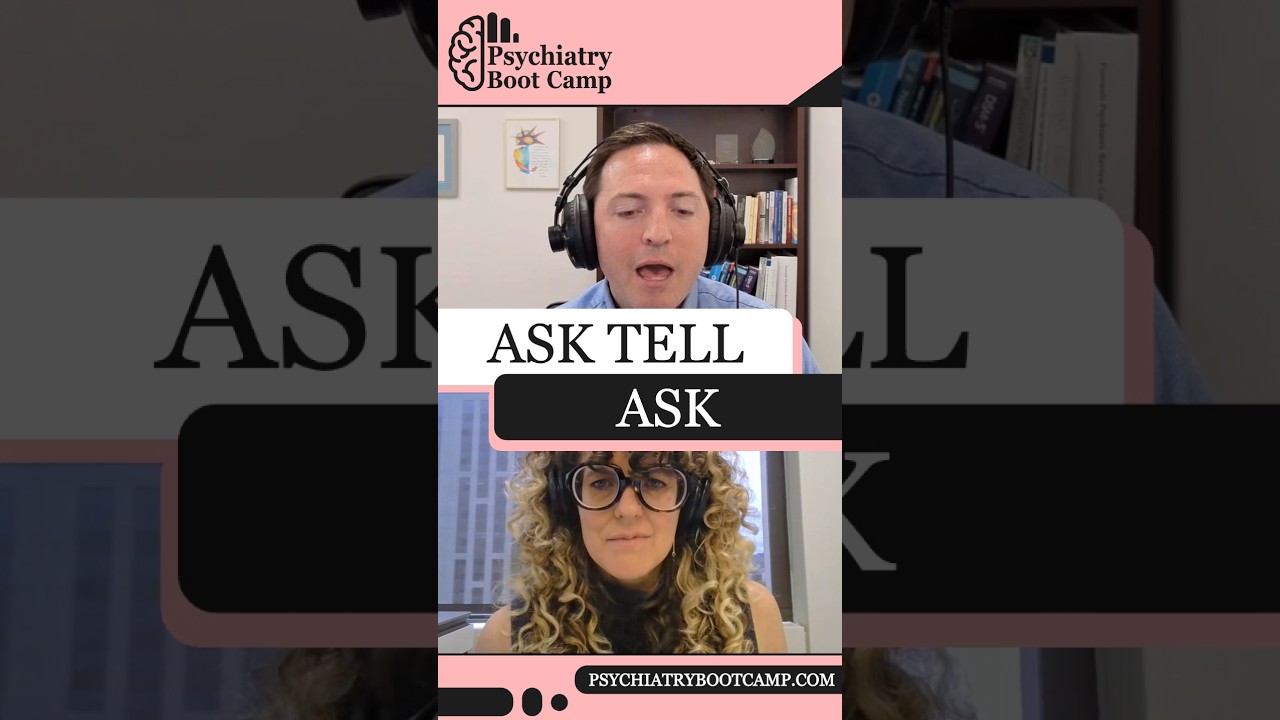
The ask-tell-ask method allows clinicians to deliver psychoeducation only when a patient has explicitly consented to receive it, preserving patient autonomy. Full episodes every other Monday. Produced by: Human Content
The conversation covers the OARS mnemonic (open-ended questions, affirmations, reflections, and summaries), the relationship between motivational interviewing and trauma-informed care, and practical strategies for identifying and reinforcing patient change talk. Full episodes every other Monday. Produced by: Human Content

Dr. Hadley introduces a novel teaching framework that draws on Tina Fey's rules of improv from her memoir Bossy Pants, mapping core improv principles, including "yes, and," making statements rather than only asking questions, and treating perceived mistakes as opportunities, onto the foundational techniques of motivational interviewing. Full episodes every…
Dr. Mark Mullen welcomes Dr. Allison Hadley, a psychiatrist and medical director of the psychiatric emergency service at Oregon Health & Science University, for a discussion on motivational interviewing in high-acuity psychiatric settings. Dr. Hadley introduces a novel teaching framework that draws on Tina Fey's rules of improv from her…
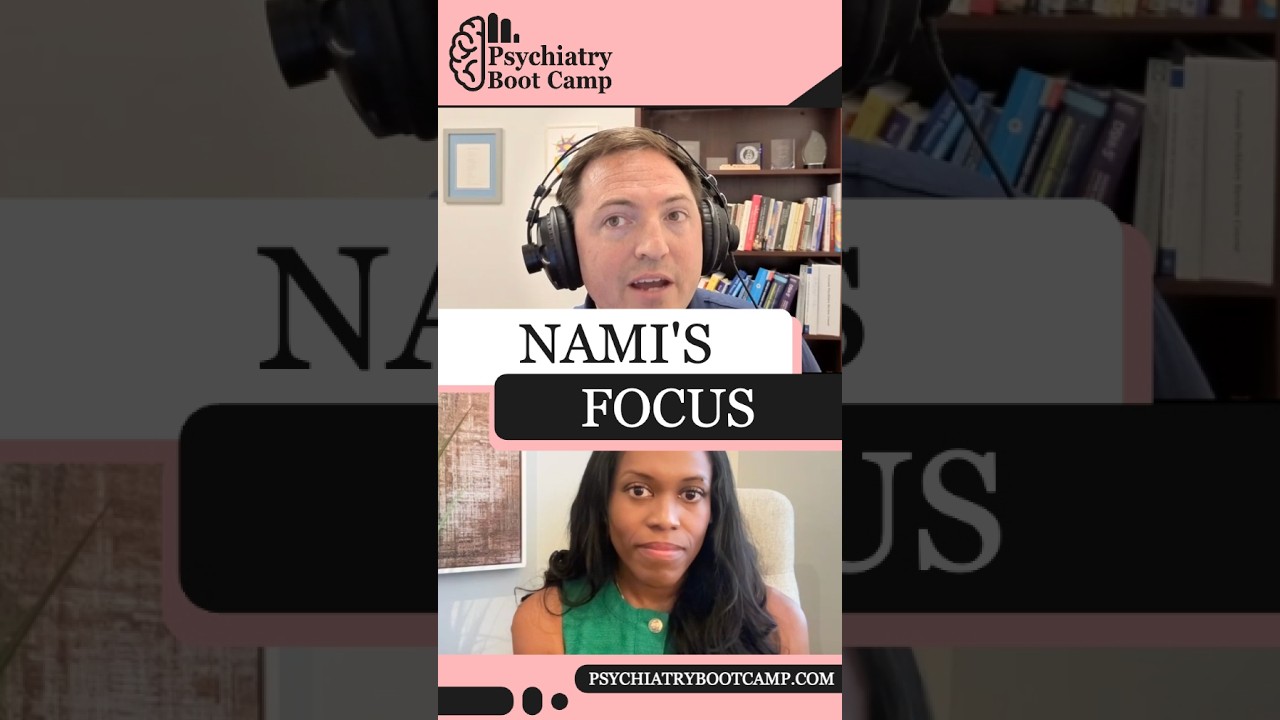
Dr. Crawford discusses NAMI's mission and its 650 chapters nationwide, the concept of the "distress radius" as a framework for identifying when a child's behavioral changes warrant professional evaluation, and practical strategies for engaging skeptical patients and families through primary care. She also highlights dialectical behavioral therapy (DBT) as a…
Dr. Crawford discusses NAMI's mission and its 650 chapters nationwide, the concept of the "distress radius" as a framework for identifying when a child's behavioral changes warrant professional evaluation, and practical strategies for engaging skeptical patients and families through primary care. Full episodes every other Monday. Produced by: Human Content
Dr. Mark Mullen welcomes Dr. Christine Crawford, Chief Medical Officer at the National Alliance on Mental Illness (NAMI) and author of You Are Not Alone: For Parents and Caregivers, alongside Steve Hoffman, Senior Vice President and Chief Preclinical Officer at the Foundation for the National Institutes of Health (FNIH). Dr.…
Dr. Mark Mullen welcomes Dr. Megan Schott, a child and adolescent psychiatrist specializing in pediatric emergency psychiatry, for a discussion on the escalating boarding crisis affecting youth in psychiatric emergencies. Dr. Schott, who has built pediatric emergency psychiatry programs from the ground up across multiple academic health systems, details how…
In this Season 5 premiere of Psychiatry Boot Camp, Dr. Mark Mullen welcomes Dr. Lia Thomas, Associate Program Director at UT Southwestern, co-lead psychiatry specialty advisor for medical students at UTSW, and co-chair of the Psychiatry Residency Application Advisor Group for ADMSEP , for a comprehensive, practical review of the…
In this season finale of Psychiatry Bootcamp, Dr. Mark Mullen assumes the role of guest as he is interviewed by guest host Dr. Preston Roche, co-host of How to Be a Patient, in a wide-ranging retrospective on Season 4. Drawing on listener questions, critical feedback, and audience-submitted comments curated from…
In this episode of Psychiatry Bootcamp, Dr. Mark Mullen welcomes Dr. David McDuff, the "grandfather" of sports psychiatry, to examine the origins, clinical framework, and practical application of this rapidly evolving subspecialty. Dr. McDuff brings more than three decades of experience as team psychiatrist for the Baltimore Orioles and Baltimore…
In this profound episode of Psychiatry Boot Camp, host Dr. Mark Mullen sits down with world-renowned researcher and clinician Dr. Jonathan Shedler. Moving beyond the "alphabet soup" of modern modalities, Dr. Shedler argues for a return to the foundational psychoanalytic principles that constitute the "trunk and roots" of all effective…
In this episode of Psychiatry Boot Camp, host Dr. Mark Mullen is joined by Dr. Justin Romano, a child and adolescent psychiatrist and host of the Millennial Mental Health Channel. Dr. Romano explores the burgeoning crisis of screen dependence and technology addiction, drawing parallels between cell phone use and traditional…
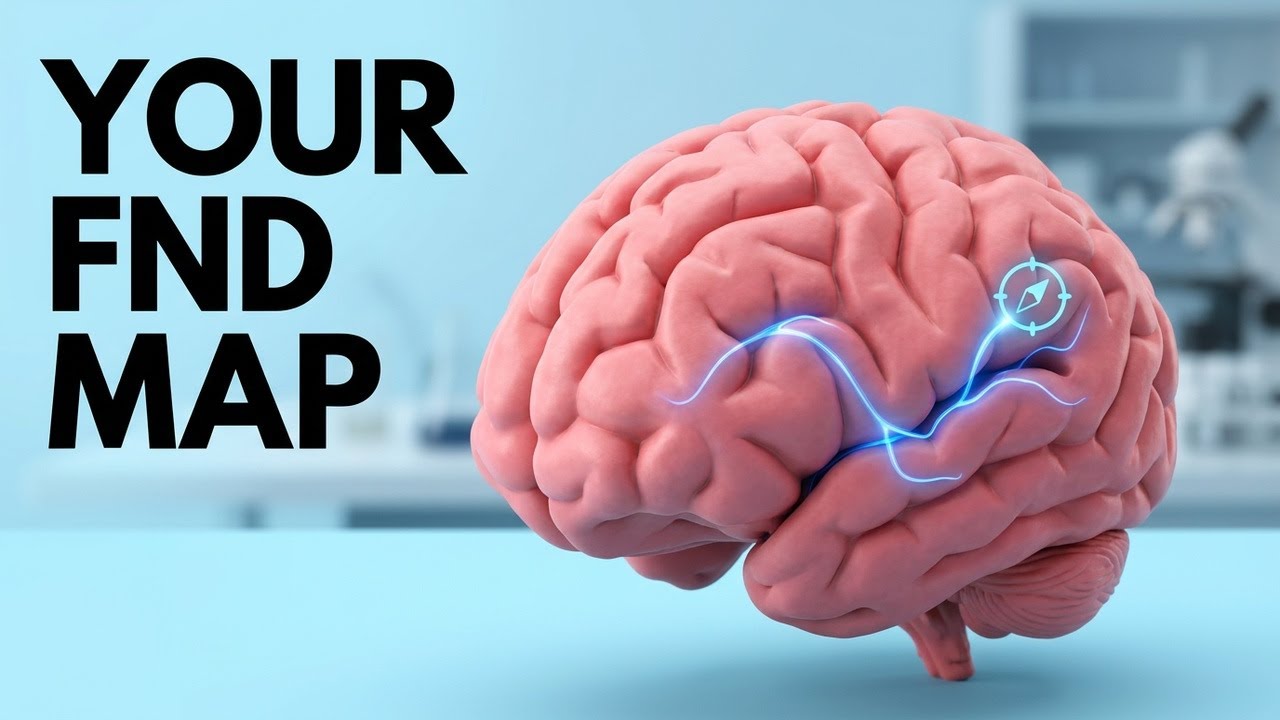
Functional Neurological Disorder (FND) sits at the crossroads of neurology and psychiatry and for many clinicians, it’s still one of the most challenging diagnoses to understand, explain, and treat. In this episode, I’m joined by Dr. Caitlin Adams, psychiatrist at Massachusetts General Hospital, for a deep dive into how to…
In this provocative episode of Psychiatry Boot Camp, Dr. Omar Mirza discusses the limitations and potential harms of the standard Applebaum-Grisso criteria for decisional capacity. Dr. Mirza argues that the current medicalized focus on cognitive abilities (understanding, appreciation, reasoning) can inadvertently subvert patient autonomy. The conversation traces the legal evolution…
In this second part of a special double feature, Dr. Awais Aftab, MD, Clinical Associate Professor at Case Western Reserve University, presents a rigorous framework for the next iteration of the Diagnostic and Statistical Manual of Mental Disorders. Dr. Aftab details six specific structural reforms for the DSM-6, beginning with…
In this episode of Psychiatry Boot Camp, host Dr. Mark Mullen sits down with Dr. Awais Aftab, MD, a psychiatrist and Clinical Associate Professor at Case Western Reserve University. Dr. Aftab, well-known for his "Psychiatry at the Margins" Substack and "Conversations in Critical Psychiatry" series, explores the necessity of "conceptual…
In this episode of Psychiatry Boot Camp, Dr. Mark Mullen speaks with Dr. Owen Muir, psychiatrist, entrepreneur, and Chief Medical Officer of Radial Health, about the growing role of transcranial magnetic stimulation (TMS) in psychiatric treatment. The discussion explores how TMS works as a form of noninvasive neuromodulation, using focused…